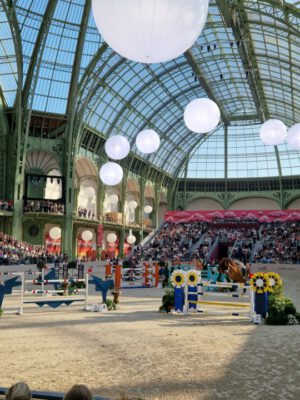
The prestigious Saut Hermès show jumping event returned to the Grand Palais in Paris last weekend. After three days of top-class show jumping, world number one Scott Brash emerged victorious from the Grand Prix.
Spring in Paris. The entire Champs-Élysées is draped in flags – not the French tricolor, but the Saut Hermès flags, this year in a palette of pink, red, and apricot. Along the Champs-Élysées, opposite Square Marigny, stand white stable tents, and at the corner of Avenue Winston Churchill is a warm-up arena where top show jumpers are working their horses, while tourists stand at the edge, marveling. Horse trailers are parked along the banks of the Seine River, where the Bateaux Mouche boats depart. And the Grand Palais, that Belle Époque jewel also built for the 1900 World Exhibition, is once again the venue for the Saut Hermès. Incidentally, equestrian tournaments were already held at the Grand Palais in the past (specifically between 1901 and 1957) – and Hermès has revived this tradition for the past 16 years.
The Grand Palais was the scene of top-level equestrian sport. Many of the world’s best riders came to Paris not only to compete for the iconic orange winner’s blankets, but also for a share of the total prize money of over €770,000.
In the breakts between the competitions, the spectators in the sold-out arena could not only watch the Hermès experts craft saddles with exquisite artistry, browse for beautiful items for themselves and their horses in the Hermès boutique, or find everything worth reading about horses (from children’s books and art books to specialist literature) in a pop-up bookstore – no, there was even a virtual reality experience where, with VR glasses, they could experience the thrill of riding a horse on a simulator.
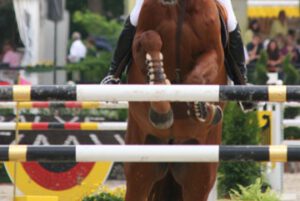
The main jumping competition on Friday, the Prix Hermès Sellier, was won by Frenchman Francois Xavier Boudant riding Brazyl du Mezel (0 faults, 60.02 seconds), ahead of his compatriot Julien Epaillard riding Easy Up de Grandry (0 faults, 60.04 seconds – pictured) and Brazilian Yuri Mansur riding Vitiki (0 faults, 61.07 seconds). The best German rider was Daniel Deusser with Bingo Ste Hermelle, finishing fourth.
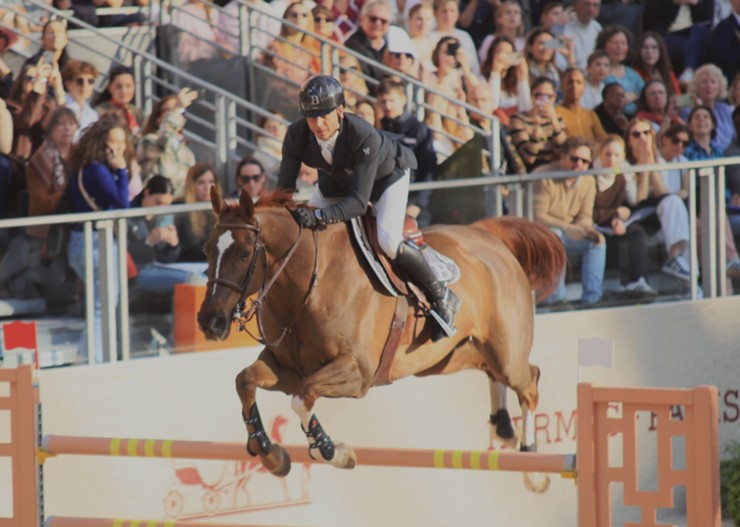
Julien Epaillard
The top ten female and male riders in the Prix Hermès Sellier qualified for Saturday’s main jumping competition, the Saut Hermès. This event (which in the past was a team jumping competition) saw Belgian Pieter Devos and Jarina J emerge victorious (0 faults, 0 faults, 45.06 seconds), followed by Irish rider Jessica Burke riding Good Star du Bary (0 faults, 0 faults, 48.22 seconds) and Swede Malin Baryard-Johnsson. Hennessy (1 / 1 / 52.32 sec). Here too, Daniel Deusser (this time with Pepita von’t Meulenhof) was the best German in seventh place.
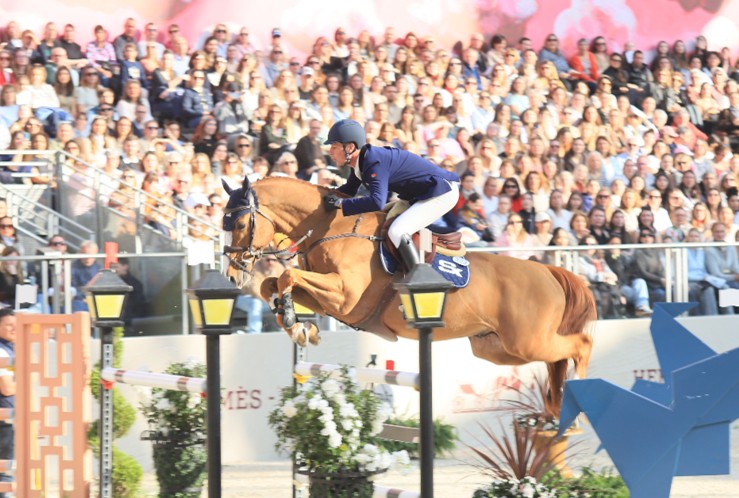
Daniel Deusser
By the way, also German rider Kendra Claricia Brinkop had some brillant rounds in Paris and German showjumping legend Marcus Ehning made his comeback in Paris after having been sidelined for the past months due to a knee injury.
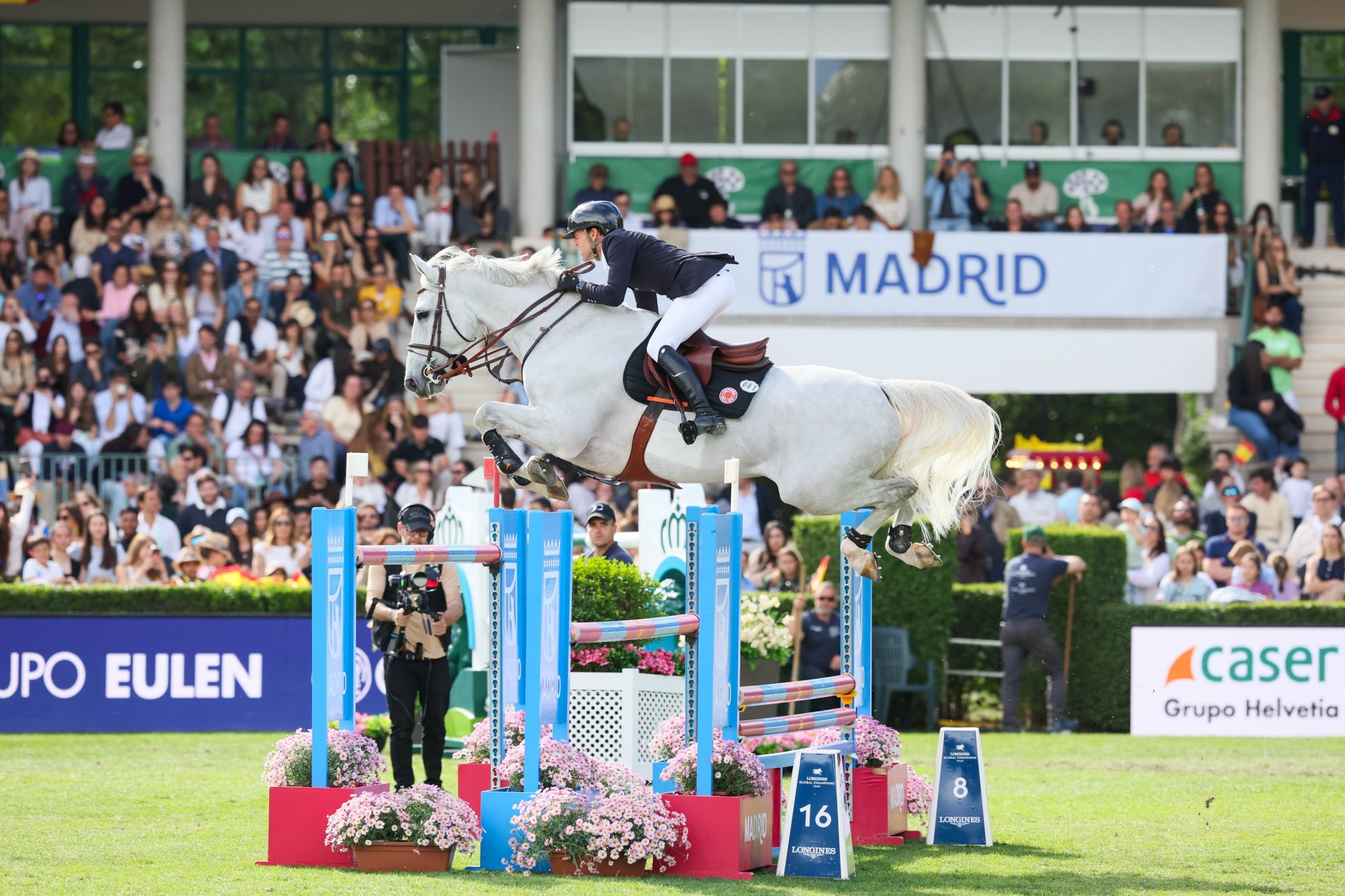
In the 400.000 Euro-Grand Prix Hermès, the world number one then dominated the competition. Scott Brash had brought Hello Chadora Lady to Paris, and in the six-rider jump-off, the Briton and his 13-year-old Chacco Blue daughter demonstrated their class. As the second rider to go in the jump-off (Martin Fuchs and Connor Jei had been the first to lay down a superb round in 33.35 seconds), Brash flew through the course and finished his ride in 32.32 seconds – none of the four subsequent riders managed to beat that time. After the competition, Brash commented, “Chadora Lady is an extremely careful horse – I just had to guide her and let her run freely around the course.” Winning in world-class style seems to be easy…..
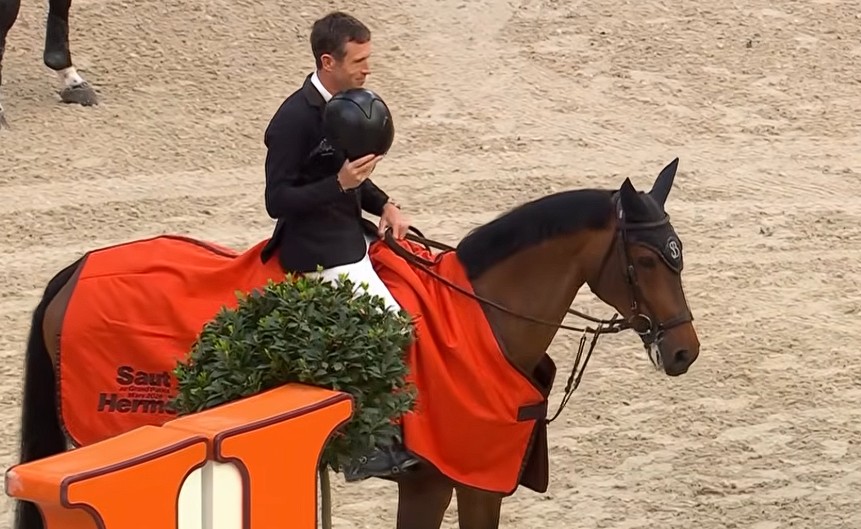
The jump-off also offered a truly rare moment: The Dutchman Harries Smolders and Mr. Tac also needed 33.35 seconds for their clear round – two rides that were identical down to the hundredth of a second are truly a rare sight.
Smolder’s compatriot Willem Greve and Grandorado finished fourth (0 faults / 34.17 seconds), followed by Thibaut Spits and Imporess K (who had one rail down) and the Norwegian veteran Geir Gulliksen and Island, who left two on the floor and also incurred time faults.
Leave a Reply